Book Review - Emotional Intelligence by Daniel Gorman PhD
Emotional intelligence explains the gap between knowing what to do and actually doing it, especially under pressure
BOOK REVIEW
11/1/20232 min read
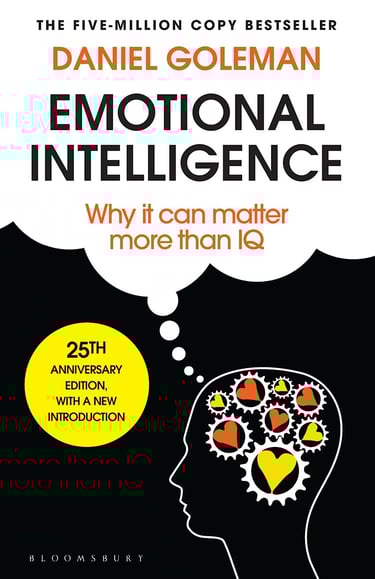
Emotional Intelligence - Daniel Goleman PhD
1. Synopsis
Emotional Intelligence argues that traditional measures of intelligence such as IQ are insufficient predictors of success, wellbeing, and effective leadership. Daniel Goleman introduces emotional intelligence (EI) as a critical set of human capabilities involving how we understand, manage, and use emotions in ourselves and in our relationships with others. Drawing on neuroscience and psychology, the book reframes intelligence as something deeply connected to emotional awareness, self regulation, empathy, and social skill.
2. Purpose / Intent / Story
Goleman’s intent is corrective rather than provocative. He challenges the over reliance on IQ and academic achievement as markers of potential, particularly in education, leadership, and organisational life. The book aims to show that emotional skills are learnable, trainable, and often more decisive than cognitive ability when it comes to performance, resilience, and long term success.
At its heart, the book is a bridge between brain science and everyday human behaviour. Goleman wants readers to understand why emotions can hijack rational thought, how this happens neurologically, and what can be done to develop healthier emotional responses.
3. Detailed Key Summary
a. What Emotional Intelligence Is
Goleman defines emotional intelligence as the capacity to recognise our own emotions and those of others, to motivate ourselves, and to manage emotions effectively in ourselves and in our relationships. He positions EI as a framework made up of distinct but related competencies rather than a single trait.
b. The Emotional Brain
A significant portion of the book explores the brain’s architecture, particularly the relationship between the amygdala and the neocortex. Goleman explains how emotional reactions can bypass rational thought in moments of stress or threat, leading to impulsive or disproportionate responses. These “emotional hijackings” explain why intelligent people can behave irrationally under pressure.
c. The Five Domains of Emotional Intelligence
Goleman groups emotional intelligence into five core areas:
Self awareness: recognising one’s emotions and their effects
Self regulation: managing disruptive emotions and impulses
Motivation: emotional tendencies that guide or facilitate goal attainment
Empathy: understanding the emotions of others
Social skills: managing relationships and building networks
These domains form the backbone of the EI model and are repeatedly applied across personal life, education, and work contexts.
d. Emotional Intelligence in Childhood and Education
The book makes a strong case that emotional competencies should be taught early. Goleman highlights how deficits in emotional regulation contribute to aggression, anxiety, and poor academic outcomes, while emotional literacy improves attention, cooperation, and resilience. He argues that schools play a crucial role in developing emotional intelligence alongside cognitive skills.
e. Emotional Intelligence at Work and in Leadership
Goleman links EI directly to workplace effectiveness. He shows how leadership success is often less about technical expertise and more about emotional competence, particularly empathy, self control, and communication. High performing leaders tend to create emotional climates that enable trust, clarity, and engagement.
f. Emotional Intelligence and Health
The book also connects emotional patterns to physical health. Chronic stress, unmanaged anger, and emotional suppression are shown to have measurable effects on the immune system and long term wellbeing. Emotional intelligence, in this context, becomes a factor in both psychological and physical resilience.
4. Reviews and Accolades / References from Others
Widely regarded as a landmark book in psychology and leadership studies
Credited with popularising the term emotional intelligence in mainstream culture
Influenced leadership development, coaching, education reform, and organisational psychology worldwide
Praised for making complex neuroscience accessible to a general audience
Criticised by some academics for broad definitions and measurement challenges, though its practical impact remains substantial
Final Insight
Emotional Intelligence reframes success as an inside out process. Goleman’s central contribution is not diminishing cognitive intelligence, but placing it in context. Intelligence alone does not guarantee wise action, healthy relationships, or effective leadership. Emotional intelligence explains the gap between knowing what to do and actually doing it, especially under pressure.
© 2024. All rights reserved.
Target Coaching, 73 Shelton Street, London, WC2H 9JQ